

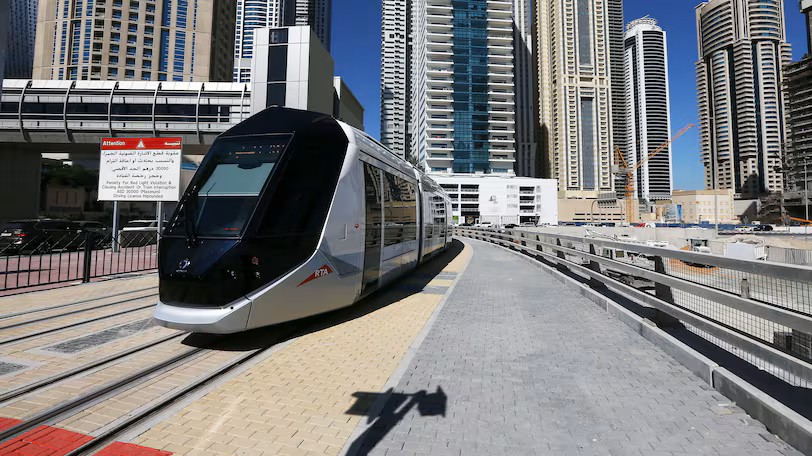
Dubai Tram turns 11 this month. Launched in 2014, five years after Dubai Metro, it was the first tram outside Europe to be powered by a ground-level electric supply system, eliminating the need for overhead cables.
By David Tusing THE NATIONAL
That made it one of the safest and most advanced tram networks of its time.
Dubai Tram was officially rolled out on the evening on November 11 to a fireworks and light show, with a very distinguished first passenger – Sheikh Hamdan bin Mohammed, Crown Prince of Dubai, now also Deputy Prime Minister and Minister of Defence.
Sheikh Hamdan rode on the tram with senior government officials for the inaugural run. The tram service opened to the public the following day, with a trip every 10 minutes during peak times and every 12 minutes during non-peak hours.
The National travelled on the tram on the first day of operation.
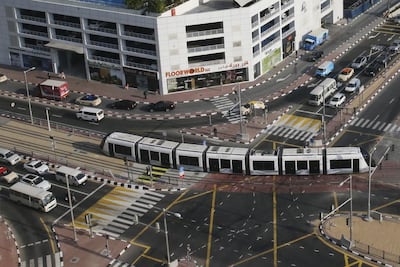
Built at a cost of Dh60 million for the first phase, it initially ran along a 10.6km track, in a loop around Dubai Marina and Jumeirah Beach Residence before heading back to its main terminus in Al Sufouh.
The network had 11 trams, with another 14 trams added in the second phase. Four air-conditioned pedestrian bridges initially connected the stations with the surrounding areas.
Each tram had seven coaches, including a gold suite and a cabin for women and children. Each 44-metre carriage could carry up to 405 passengers.
Linked to the Dubai Metro network and Palm Jumeirah’s monorail, Dubai Tram continues to be a popular mode of transport, with more than 4.9 million rides recorded in the first half of this year, according to the Roads and Transport Authority.
Its success has inspired authorities to launch other modes of transport to ease congestion in the city. Last year, to coincide with Dubai Tram’s 10th anniversary, Sheikh Hamdan unveiled plans for electric trackless and autonomous trams at eight locations across Dubai. More


