

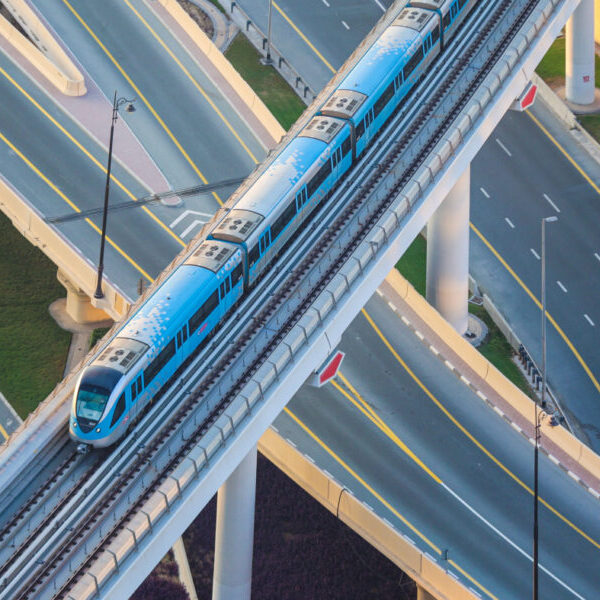
Dubai is pressing ahead with an ambitious, multi-layered transport expansion programme as the emirate seeks to address mounting traffic pressures driven by rapid population growth, expanding commercial districts, and rising visitor numbers.
Through a combination of new metro lines, station upgrades, and large-scale road and bridge projects, the Roads and Transport Authority (RTA) is reshaping the city’s mobility landscape in what officials describe as one of the most comprehensive infrastructure pushes in recent years.
From unveiling new metro corridors to easing bottlenecks at critical intersections and gateways, Dubai’s strategy reflects a long-term effort to future-proof mobility while supporting economic growth, urban expansion, and quality of life.
Dubai Metro Blue Line: Backbone for urban connectivity
RTA had released the official route map of the Dubai Metro Blue Line, offering the first detailed look at the emirate’s next major public transport project. Scheduled to open in 2029, the new line will connect 14 ground-level and underground stations across the city, with a capacity exceeding 320,000 passengers per day.
The Blue Line will consist of two main routes. The first spans 21 kilometres from Creek Interchange Station, passing through Dubai Festival City, Dubai Creek Harbour, Ras Al Khor, and International City, before terminating at Academic City. This section will include 10 stations, among them an underground interchange.
The second route covers nine kilometres, running from Centrepoint Interchange Station in Al Rashidiya to International City 1, via Mirdif and Al Warqa, with four stations along the corridor. Supporting the operation will be a new metro depot to be built at Al Ruwayah 3, reinforcing the project’s scale and long-term operational readiness.
Gold Line plans signal further metro network expansion
In March 2025, it emerged that Dubai is preparing to take another step toward easing traffic congestion with plans for the Dubai Metro’s Gold Line. The proposed line underscores RTA’s broader strategy of expanding rail coverage to complement road infrastructure and relieve pressure on existing routes.
The Gold Line is planned to begin at Al Ghubaiba in Bur Dubai, extending through Business Bay, Meydan, Global Village, and Dubailand. Once operational, the line is expected to reduce congestion on the heavily utilised Red Line while improving accessibility between Dubai’s older districts and its newer residential and commercial developments.
The planned route reflects Dubai’s evolving urban geography, as population growth and real estate development increasingly stretch beyond traditional city centres. More
By Nida Sohail Gulfbusiness


